designing a
Digital Tool Chain for ctrlX FLOW
Summary
For a new generation of motion systems, define and design a set of tools for the complete customer journey ranging from buying to configuring, validating, programming to commissioning and fault finding. Additionally, help Rexroth maturing on UX along the way.
| My Role | UX/CX/UI designer, digital product designer | |
| Aim | To deliver a set of designs to serve as work packages for external dev teams | |
| Challenge | To define and design a set of tools with little requirements | |
| Start | July 2022 | |
| Duration | 3+ years | |
| What I did | Competitive Analysis, User Research, Information Architecture, Technical Analysis, Interaction Design, Low- and High-Fidelity mockups. | |
| Tools |  |
Because of confidentiality, published work on this page may not be from the actual project but can be re-imaged work in the same style.
The story
Rexroth is a Bosch company with a separate brand identity. The DC-AE unit of Bosch Rexroth is transforming from a component vendor to a solution supplier, selling pre-assembled building blocks for material movement lines in factory environments. While making this shift, an entire new product portfolio is being developed. This encompasses new hardware, new software, and a new customer experience in which ordering, configuring, programming, and commissioning a new system should become much easier. For this, a new suite of tools, called a "digital tool chain", is needed. I have been brought onboard to design these tools.
The problem
The project, called ctrlX FLOW, already had rebooted once and different ideas were explored but not brought into implementation for various reasons. The problem was that everything was new, undefined and therefore in flux: new hardware modules were going to be developed, but specifications were not ready yet. New software should be developed for that hardware, but this depended on that unavailable hardware. Big steps should be taken to make the process of buying and assembling a product line much easier, but how? After some time, it was decided that getting a UX designer onboard could help getting more clarity and focus.
“In a world where everything is in flux, how to design a set of applications without any requirements?”
The Bosch Rexroth UX world
At Bosch, there is an enormous UX community (>550 UX professionals!) in often autonomous departments. Yet at Bosch Rexroth Eindhoven, I am the sole UX’er. Part of my responsibilities were reaching out and teaming up with the different UX groups within Bosch, see where we could cooperate and defining a UX process within Rexroth Eindhoven. After a few years, I've also become a member of the UX/UI steering committee of the Rexroth ctrlX platform, defining guidelines, giving trainings and presentations.
The process
As we started off discussing the required functionality for the tools of the digital tool chain (DTC) and trying to come up with designs for that, I quickly realized we were retaining the status-quo of endless UI re-designs as the hardware product design was being worked out and ideas were constantly changing. A more structured approach was needed.
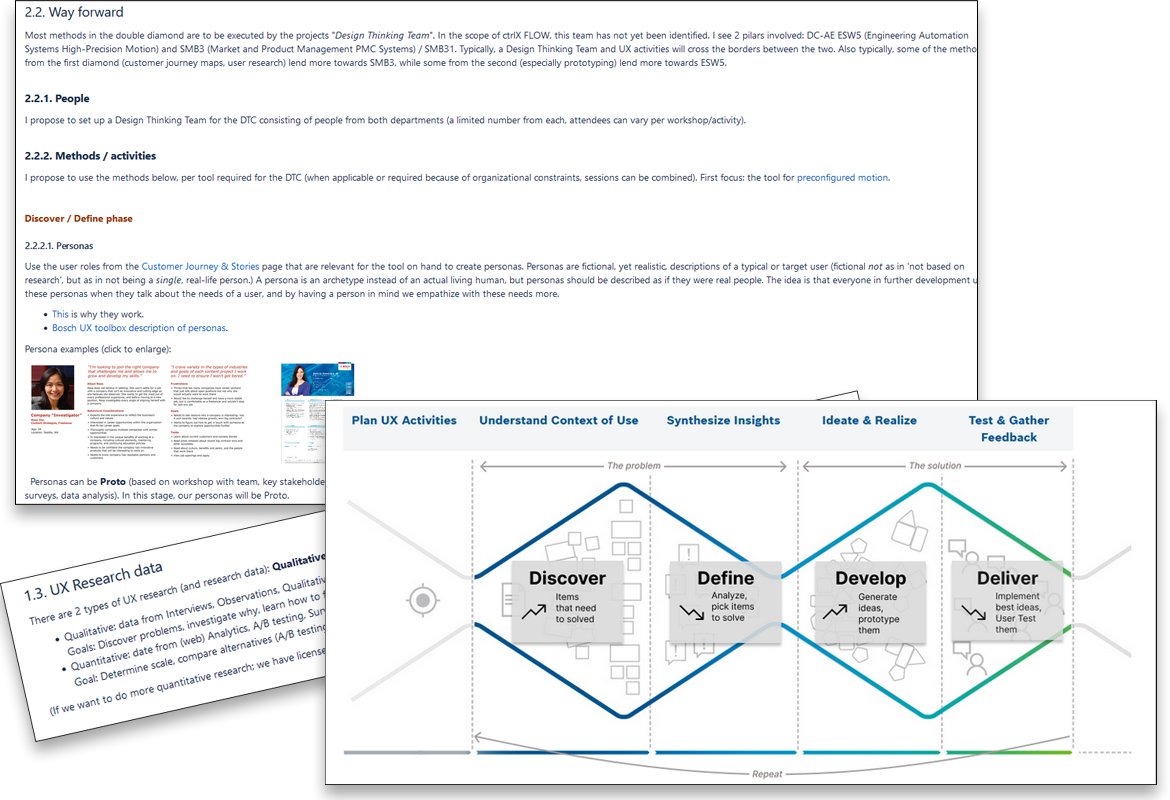
I decided to write a UX plan for the development first. Taking elements of the Bosch double diamond process, I created a plan tailored to the development of the ctrlX FLOW digital tool chain. I formed a Design Thinking Team with stakeholders from both the business development- and the software development departments, explained the different parts of the UX plan and why these UX activities matter and worked to get commitment.
The business development department already made some ‘pain and gain’ overviews and customer journey descriptions. Together with the Design Thinking Team, I detailed those further. These are some of the activities on the time-line of the plan:

I formed a sub group of customer experts to work out personas based on the user roles in the customer journey and led several persona workshops in which I explained the theory behind personas and presented a base template. As to get buy-in and enthusiasm for the use of personas within the organization, I made the team co-responsible for which information we wanted to be present on ours. After the workshops I worked out the personas in high fidelity.
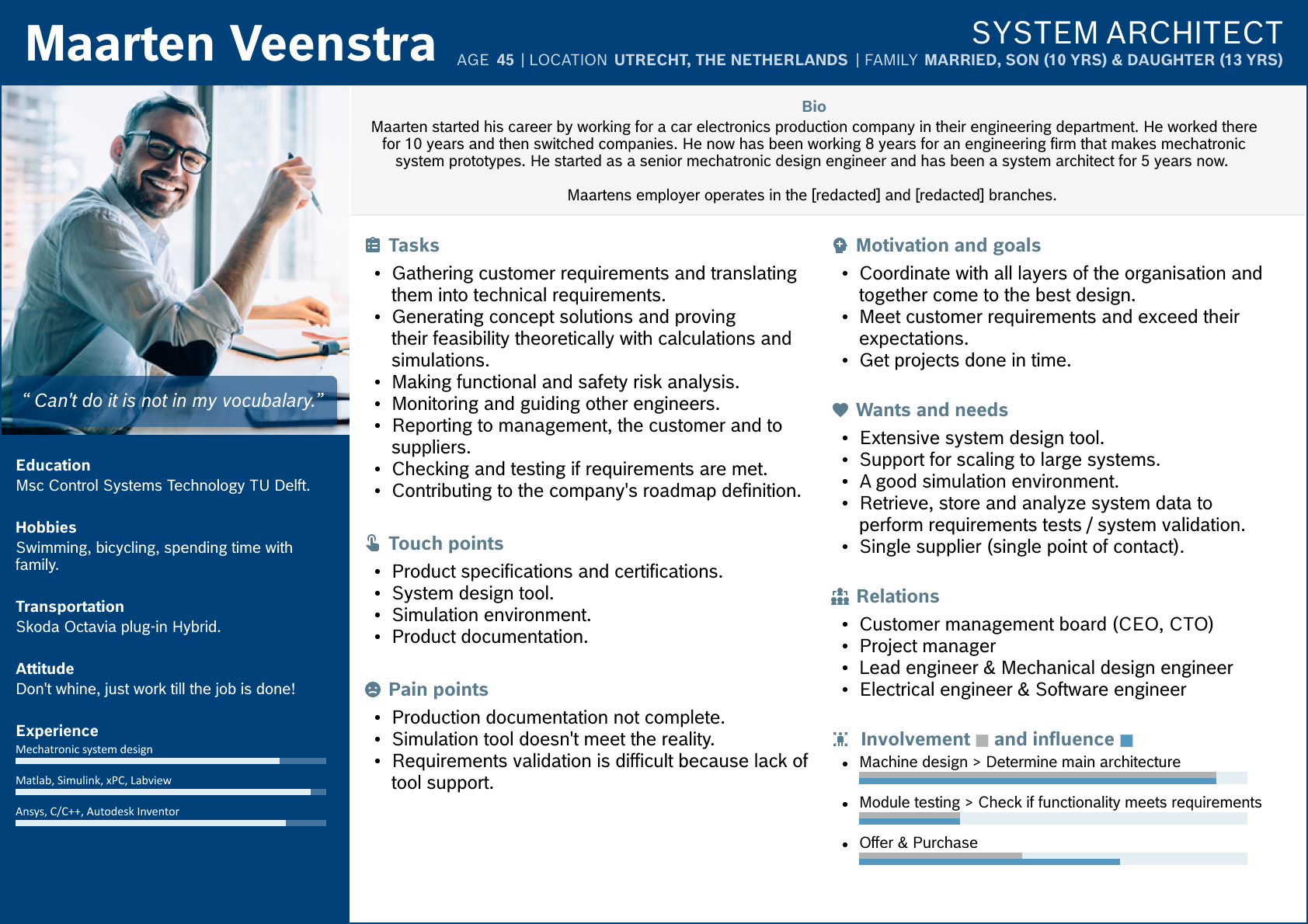
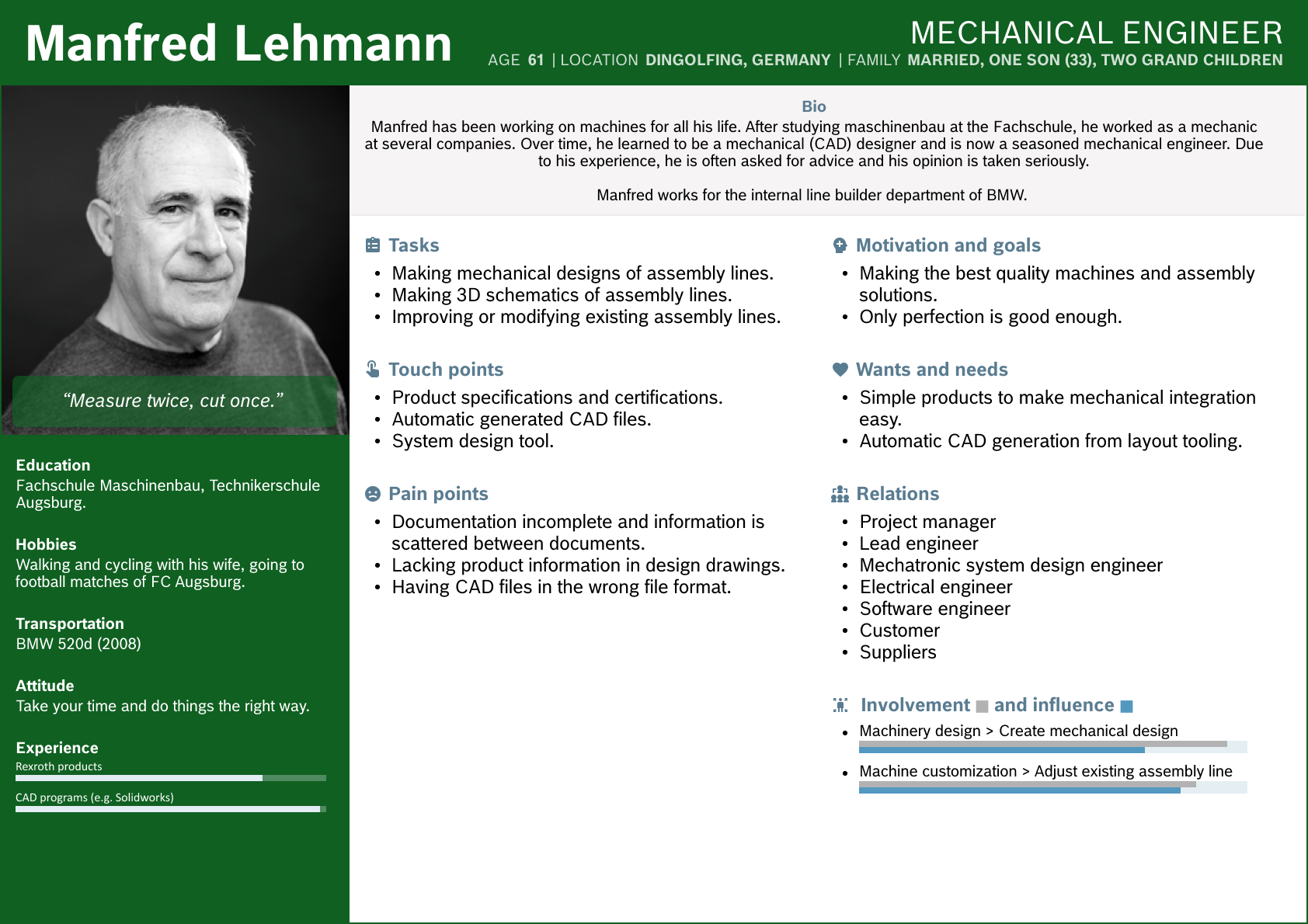
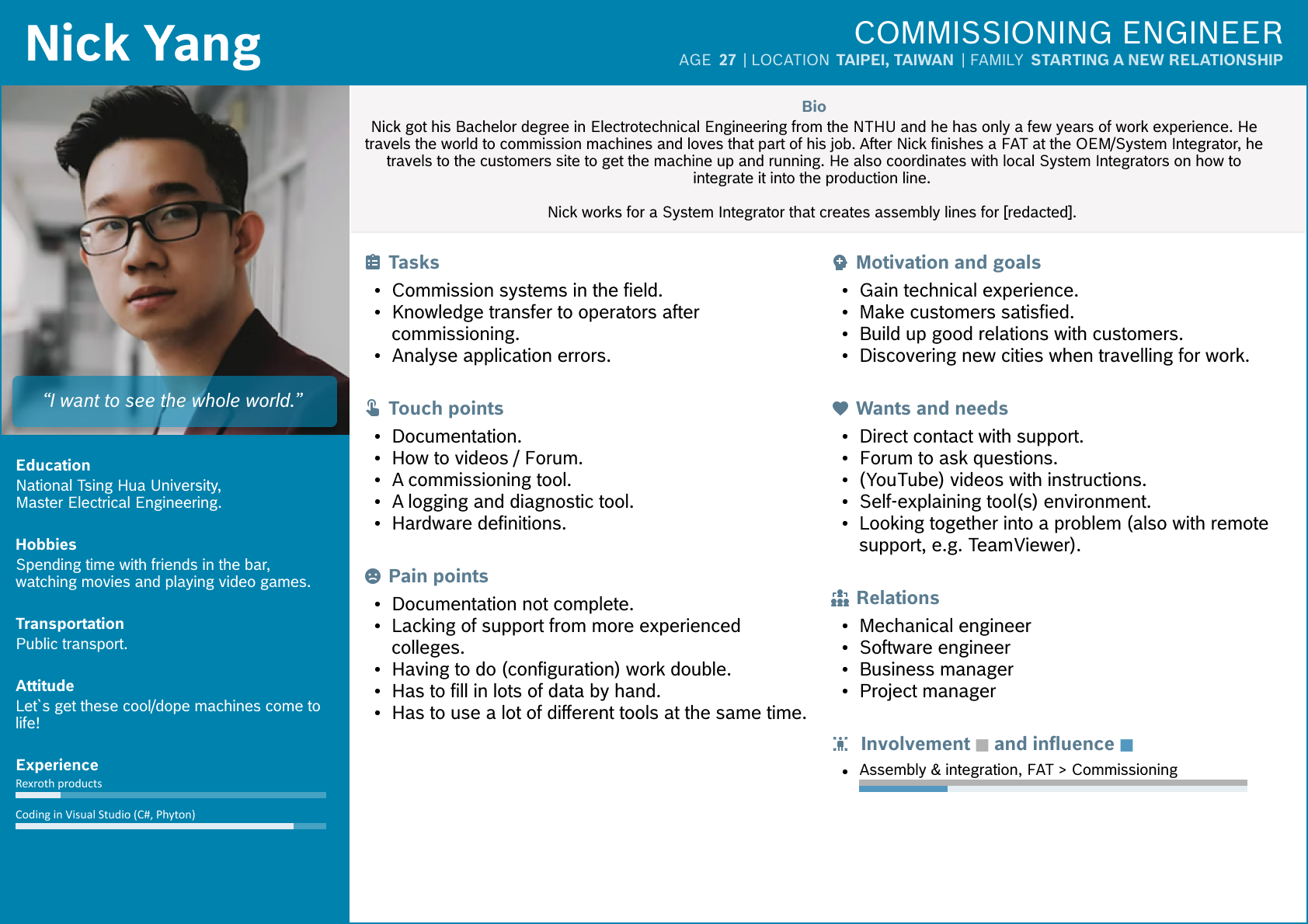
The next step was discussing required functionality for the first tool to be developed. In these discussions, the personas and customer journey were often used and provided a great help to structure discussions.
Next up was designing that first application. By now we only had some very high level requirements, and using low-fidelity mockups proved to be the ultimate tool in visualizing how a tool for those requirements could function.
Workshop to work out some user flows:
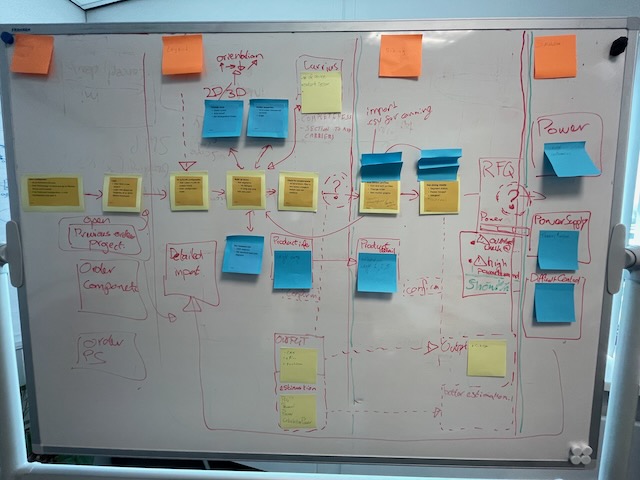
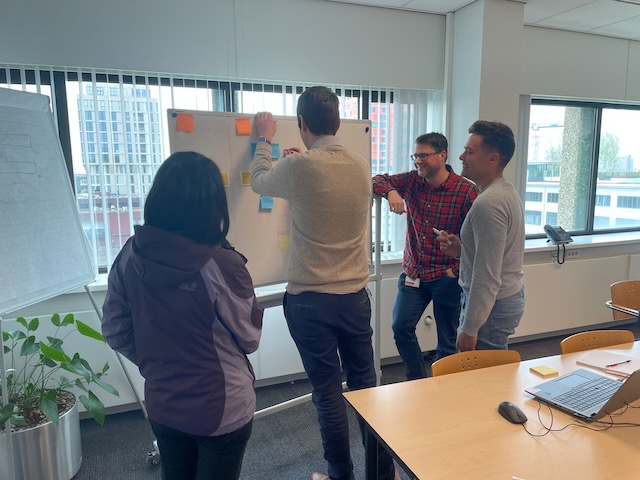
Over the course of a number of months I designed the entire application in more than 50 low-fidelity mockups which I discussed with internal stakeholders. On some occasions I worked out interactive prototypes in Axure, so we could test the interactions with application specialist before the designs went to production.
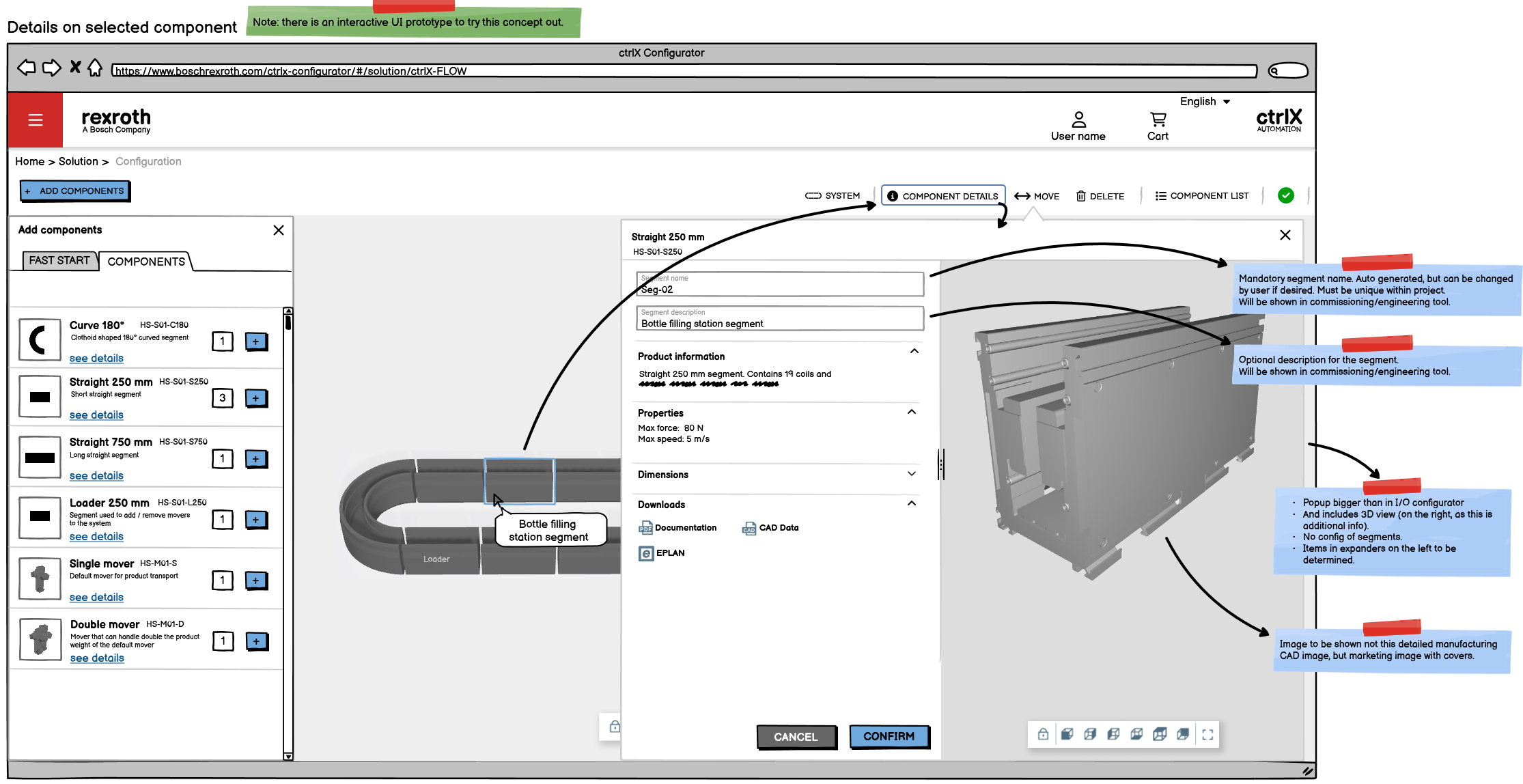
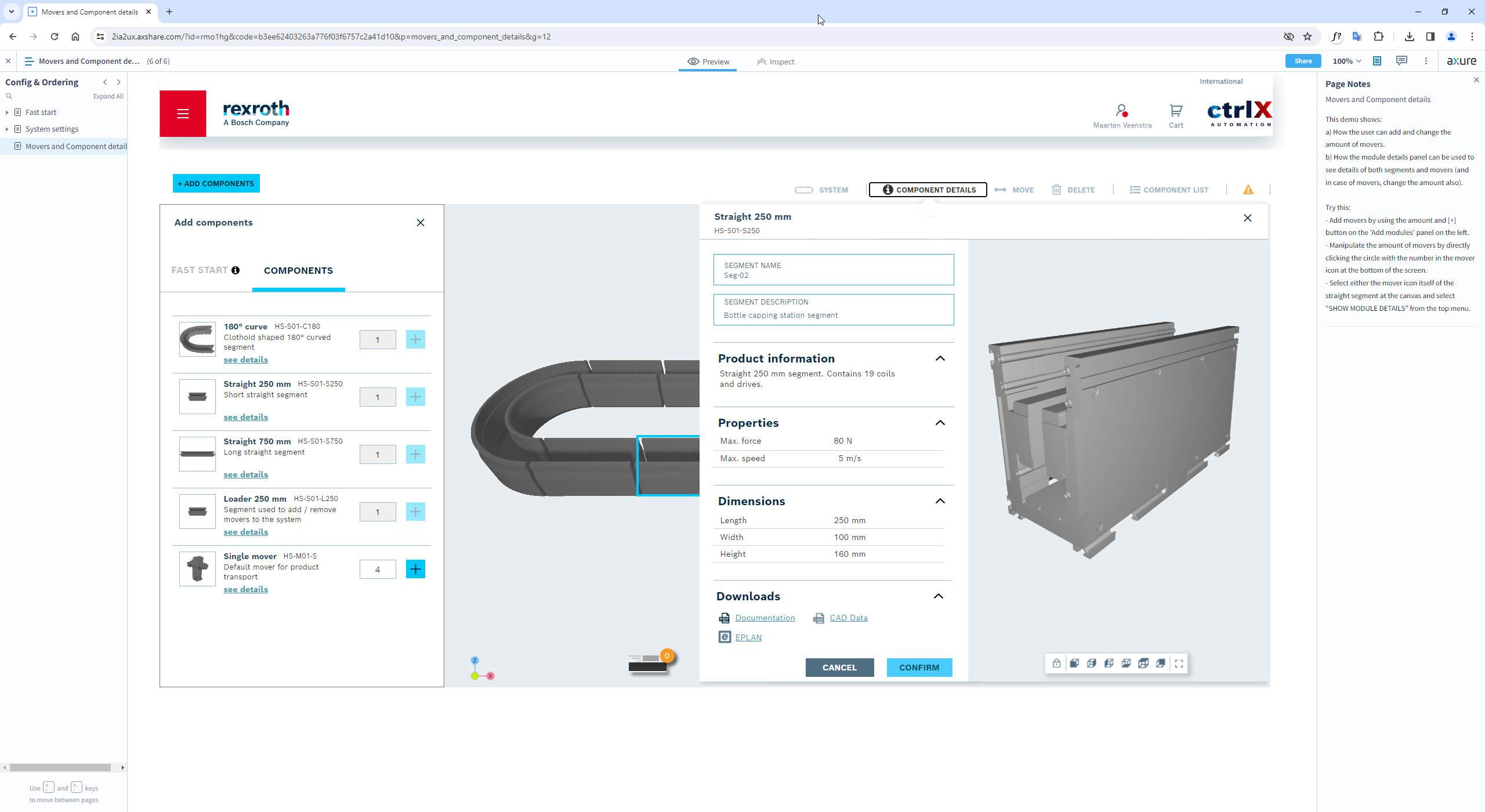
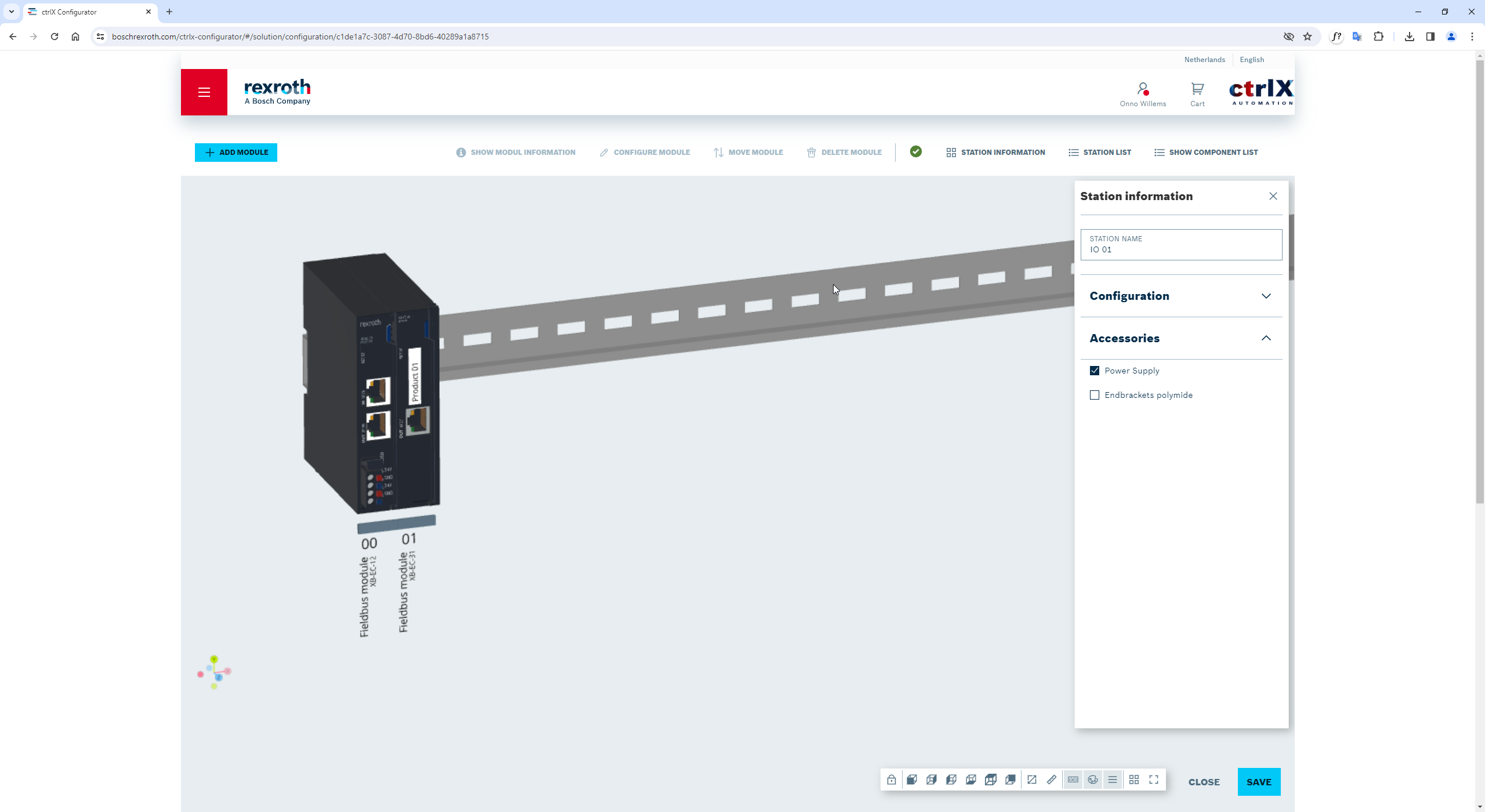
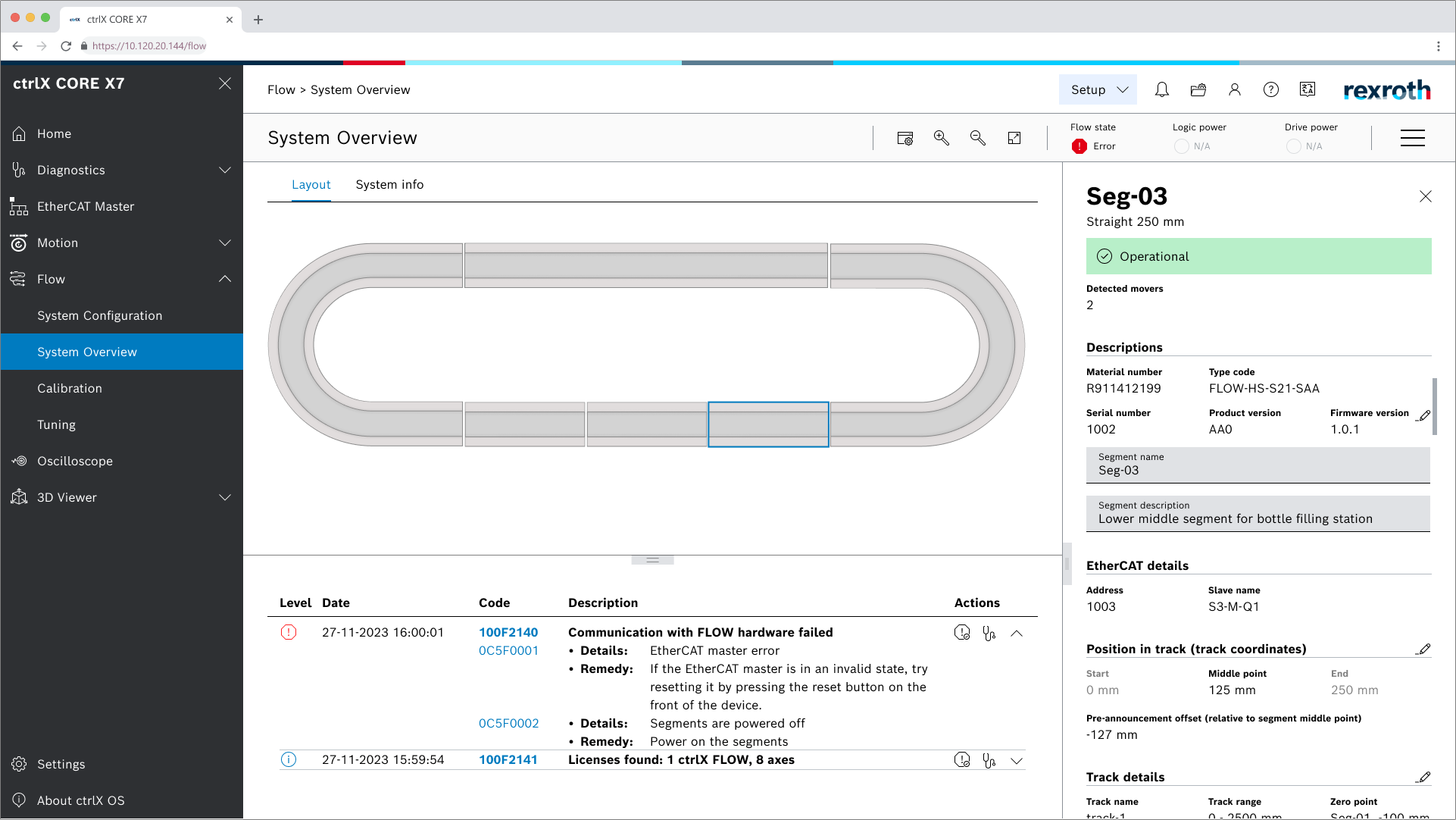
I've followed this process for several tools:
- The ctrlX FLOW online configurator (the first touchpoint for many customers), used for configurating and ordering.
- The product UI of the ctrlX FLOW application
- The ctrlX FLOW Engineering tool
Result and Takeaway
I am holding frequent feedback sessions with stakeholders and (internal) end users of the tools. These sessions prove not only invaluable for getting that feedback (further iterating on the design of the tools), but also to facilitate discussion on functionality of the (hardware) system being developed.
I've set up an hand-off structure and am working closely together with multiple multi-site front end development teams that are building the tools.